
HOW TO BREAK INTO MEDICAL DEVICE SALES (AND WHY MOST CANDIDATES FAIL BEFORE THEY START).

Updated: Apr 13
Medical device sales has become one of the most sought-after careers in healthcare. The earning potential is real, the technology is cutting-edge, and the impact on patient care is tangible. For ambitious professionals, it offers a rare combination of financial upside, intellectual challenge, and long-term career mobility.
And yet, despite the demand, most candidates trying to break into medical device sales never make it past the initial screening.
If you’ve been applying to medical device sales roles and hearing nothing back, or you’re just beginning to explore this career path, the problem likely isn’t your drive. It’s your preparation.
Breaking into medical device sales requires more than enthusiasm. It requires readiness.
Why Medical Device Sales Is So Competitive
Medical device sales is not traditional B2B selling. You are not pitching marketing services or SaaS subscriptions. You are selling technology that enters operating rooms, catheterization labs, and specialty clinics. You are working with surgeons, interventional cardiologists, electrophysiologists, and highly trained clinical professionals who expect fluency and precision.
Hiring managers know this.
They aren’t simply looking for candidates who “want it badly.” They’re looking for individuals who can walk into a clinical environment and demonstrate an understanding of how healthcare works, how device companies operate, and how commercial teams create value within complex clinical ecosystems.
Hundreds of applicants compete for every open territory. Most bring strong resumes. Many bring solid sales backgrounds. What they often lack is industry fluency.
That gap is where careers stall.
The Real Reason Entry-Level Candidates Get Rejected
After working alongside medical device manufacturers for more than 2 decades, one pattern appears consistently: candidates are motivated but underprepared.
They struggle to articulate:
How the U.S. healthcare system is structured
How reimbursement and purchasing decisions influence sales cycles
How a medical device company’s sales team interacts with marketing, regulatory, and clinical departments
What territory management actually looks like in the field
Without that foundation, even strong candidates appear risky.
From a manufacturer’s perspective, hiring someone who lacks industry understanding means longer onboarding timelines, slower time-to-first-sale, and increased ramp costs. In a quota-driven environment, that risk matters, so companies quietly filter for candidates who demonstrate they have already done the work.
The Mistake Most “Medical Device Development Training” Programs Make
Many programs designed to help candidates break into medical device sales focus primarily on the back end of the hiring process.
They teach resume formatting. They offer interview coaching. They help refine LinkedIn messaging.
While those elements are helpful, they address presentation, but not preparation.
Improving your interview answers without understanding how the device industry works is like polishing a car without building the engine. You may look ready. But under scrutiny, the foundation is missing.
What Makes a Candidate Stand Out?
The highest-performing reps in medical device sales share something in common long before they reach leadership roles: they understand the environment.
This understanding—what we call Clinical Currency—is the blend of healthcare literacy, commercial acumen, and relationship intelligence that allows a representative to earn credibility quickly.
Clinical Currency means knowing how patient pathways influence product adoption. It means understanding how hospitals evaluate capital equipment versus disposable devices. It means recognizing how clinical trials, regulatory approvals, and reimbursement frameworks affect product positioning.
When candidates demonstrate this level of awareness in an interview, the conversation shifts. They are no longer seen as hopeful applicants. They are viewed as future contributors.
That shift changes everything.
Do You Need a Medical Background to be in Medical Devices Sales?
One of the most common questions aspiring reps ask is whether they need a clinical degree to break into medical device sales. The answer is no.
Many top-performing reps come from B2B sales, athletics, finance, military service, education, or general business. What they share is coachability, discipline, and the ability to communicate complex information clearly.
A medical background can provide an advantage in terminology and clinical exposure. But it is not required. What is required is intentional learning.
If you do not come from healthcare, you must build that fluency yourself. That means studying the healthcare system, understanding device categories, learning how territories are structured, and mastering the behaviors that define top performers in the field.
That is where structured medical device sales training becomes valuable.
Why Medical Device Sales Certification Can Change Your Trajectory
Manufacturers and recruiters increasingly value candidates who arrive prepared. Not because certification guarantees performance, but because it signals commitment and initiative.
A rigorous medical device sales certification program should equip you with:
A working understanding of the U.S. healthcare ecosystem
Insight into how medical device companies structure their commercial operations
Knowledge of how sales interacts with clinical, marketing, and regulatory teams
The behavioral expectations of high-performing reps
A clear roadmap for breaking into your first role
When candidates complete foundational training before applying, they shorten their learning curve and increase hiring confidence.
Recruiters notice, hiring managers notice, and ramp timelines improve.
Certification alone will not land you the job, but preparation will dramatically improve your odds.
The Career Path Is Worth the Investment
Medical device sales offers a legitimate growth trajectory.
Entry-level medical device sales reps typically begin as associate reps or clinical support specialists, often earning between $60,000 and $90,000 in their first year depending on specialty and geography.
As reps gain territory ownership and clinical credibility, six-figure total compensation becomes common. Senior leadership roles—regional managers, zone leaders, vice presidents—represent significant earning and influence potential.
Device categories such as interventional cardiology, electrophysiology, cardiac CT, orthopedics, and spine offer especially strong earning upside. But they also require steep learning curves.
Those who master the fundamentals early accelerate faster.
How to Break into Medical Device Sales? Preparation Is the Differentiator
The candidates who successfully break into medical device sales are not always the most polished or the most connected. They are the ones who show up prepared.
They understand the industry before they ask to join it. They speak the language before they enter the room. They invest in their own development before expecting a company to invest in them.
If you are serious about building a long-term medical device sales career, begin with your foundation.
Develop industry fluency. Learn how device companies operate. Understand territory strategy. Study the behaviors of top performers.
Because in this industry, preparation isn’t optional. It’s knowing your way around the healthcare system – understanding payors, reimbursement, device company structure. Understanding who are the decision makers, their pain points, how they think. A resume may get you and interview, but it won’t get you a job.
That’s the edge you need to break into and STAY in medical device sales.
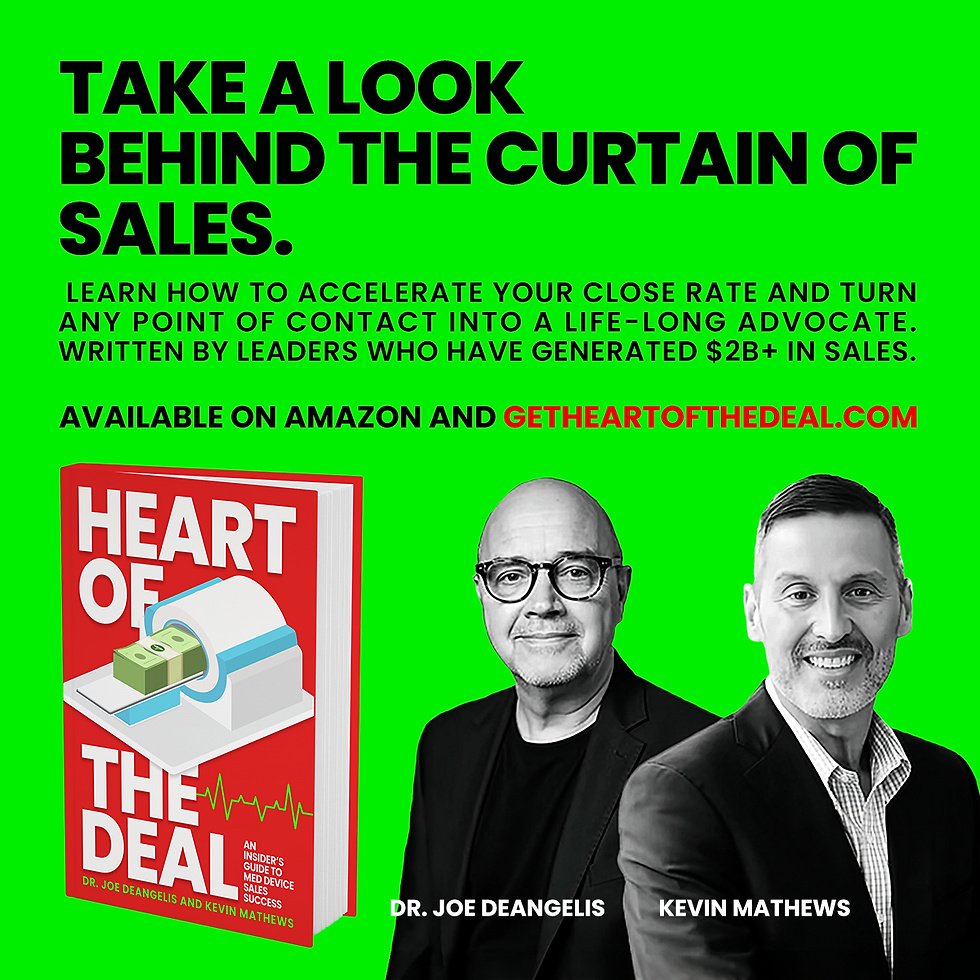
If you're ready to build that foundation, the Heart of the Deal certification program was designed for exactly this moment — before the interview, before the offer, before the career. Start today at getheartofthedeal.com.
Comments