
WHY GREAT SALESPEOPLE STILL STRUGGLE TO BREAK INTO MEDICAL DEVICE SALES.

Updated: Apr 7
On the surface, it seems like a great salesperson should be able to sell anything.
If you have a proven track record in B2B sales, have exceeded quota, built strong client relationships, and know how to compete, it is only natural to assume those strengths should open the door to medical device sales. After all, selling is selling, right?
Not exactly.
This is one of the biggest misconceptions among talented professionals trying to break into the medical device industry. Many highly capable salespeople find themselves frustrated, confused, and repeatedly rejected when they pursue device roles. They know they can sell.
They know they can build trust. They know they can compete. Yet somehow, they are still not getting interviews or offers.
The reason is not that they lack talent.
It is that medical device sales requires more than general selling ability. It requires a different kind of readiness, a different kind of credibility, and a much deeper understanding of the environment in which you are expected to perform. This is why great salespeople still struggle to break into medical device sales.
The Industry Is Different by Design
Medical device sales is not simply another sales job. It sits at the intersection of business, clinical care, healthcare economics, and human trust.
In many other industries, a strong seller can rely on persuasion, relationship skills, persistence, and product knowledge to succeed. In medical device, those things still matter, but they are not enough on their own. You are often operating in environments where decisions affect patient care, physician confidence, procedural outcomes, hospital economics, and organizational reputation.
That changes everything.
When a company hires a medical device sales professional, they are not just hiring someone to move product. They are hiring someone who can represent the company in front of clinicians, administrators, procurement stakeholders, and cross-functional internal teams. They are hiring someone who can communicate with credibility in high-stakes environments. They are hiring someone who understands that trust is not a soft skill in this industry. It is currency.
This is where many otherwise strong salespeople begin to struggle.
General Sales Success Does Not Automatically Translate
A top performer from B2B tech, payroll services, copiers, logistics, pharmaceuticals, or another commercial sector may bring outstanding strengths to the table. They may be disciplined, resilient, persuasive, and highly motivated. Those are real assets.
But hiring managers in medical device are asking a more specific question:
Can this person step into our world quickly and credibly?
That question is bigger than sales ability.
Can you speak the language of healthcare?
Do you understand how hospitals function?
Do you know how medical device companies are structured?
Can you navigate the difference between a physician user, an economic buyer, and an internal clinical support team?
Do you understand what matters in an operating room, a cath lab, or a procedural setting?Can you build confidence without pretending to know what you do not know?
Candidates who cannot answer those questions with confidence often find themselves screened out, even when they are clearly talented.
Credibility Comes Before Opportunity
One of the harsh realities of trying to break into medical device is that employers are often looking for evidence of readiness before they are willing to give you the opportunity.
This creates a frustrating cycle for candidates.
You need device experience to get considered.
But you cannot get device experience until someone gives you a chance.
That is exactly why so many good people stay stuck.
The candidates who break through are usually the ones who figure out how to build credibility before they ever get hired. They do not simply say they want to be in medical device sales. They show that they have done the work to understand the field.
They study the industry.
They learn how U.S. healthcare works.
They understand how hospitals and health systems make decisions.
They translate their resumes in a way that makes their background relevant.
They learn how to speak in a way that shows commitment, seriousness, and practical readiness.
In other words, they begin to reduce the risk for the employer.
And that matters, because when a manager hires a new-to-device candidate, they are taking a risk. They are betting that the person can learn quickly, represent the organization well, and gain traction in a complex market. The more you can demonstrate readiness in advance, the easier it becomes for that manager to say yes.
Medical Device Requires Clinical Currency
One of the most important concepts for aspiring device professionals is what we call Clinical Currency.
Clinical Currency is the ability to connect with healthcare professionals through knowledge, relevance, empathy, and trust. It does not mean you need to pretend to be a clinician. It does mean you need enough understanding of the clinical and healthcare environment to communicate credibly.
This is one of the major gaps that keeps talented people out of the industry.
A candidate may know how to sell, but if they do not understand the customer’s world, they are unlikely to inspire confidence. In medical device, that gap is visible immediately. Hiring managers can hear it in how you speak. Recruiters can see it in your resume. Interviewers can feel it in your answers.
The strongest candidates are not always the ones with the flashiest backgrounds. Often, they are the ones who have made the effort to become device-ready before the interview ever begins.
Why So Many Candidates Get Overlooked
Most candidates who struggle to break in are making one or more of the same mistakes:
They assume their sales success should speak for itself.
They use a generic resume that does not translate to medical device.
They underestimate how competitive the industry really is.
They fail to learn the fundamentals of healthcare delivery and decision-making.
They approach interviews with ambition, but not enough industry fluency.
None of this means they are incapable.
It simply means they are being compared against candidates who have done more to prepare.
Medical device is an attractive industry for a reason. It offers strong income potential, intellectual challenge, prestige, and the chance to work in a sector that directly impacts people’s lives. Because of that, competition is intense. Wanting it is not enough. Being talented is not enough. You have to show that you are ready for it.
Preparation Is the Difference
The good news is that this gap can be closed.
Breaking into medical device is not reserved only for those who already have industry experience. But it does require a smarter approach than simply applying online and hoping your sales numbers will carry you through.
You need preparation that helps you understand the industry from the inside out. You need language, structure, and perspective that make you more credible. You need a roadmap that explains what hiring managers are really looking for and how to position yourself accordingly.
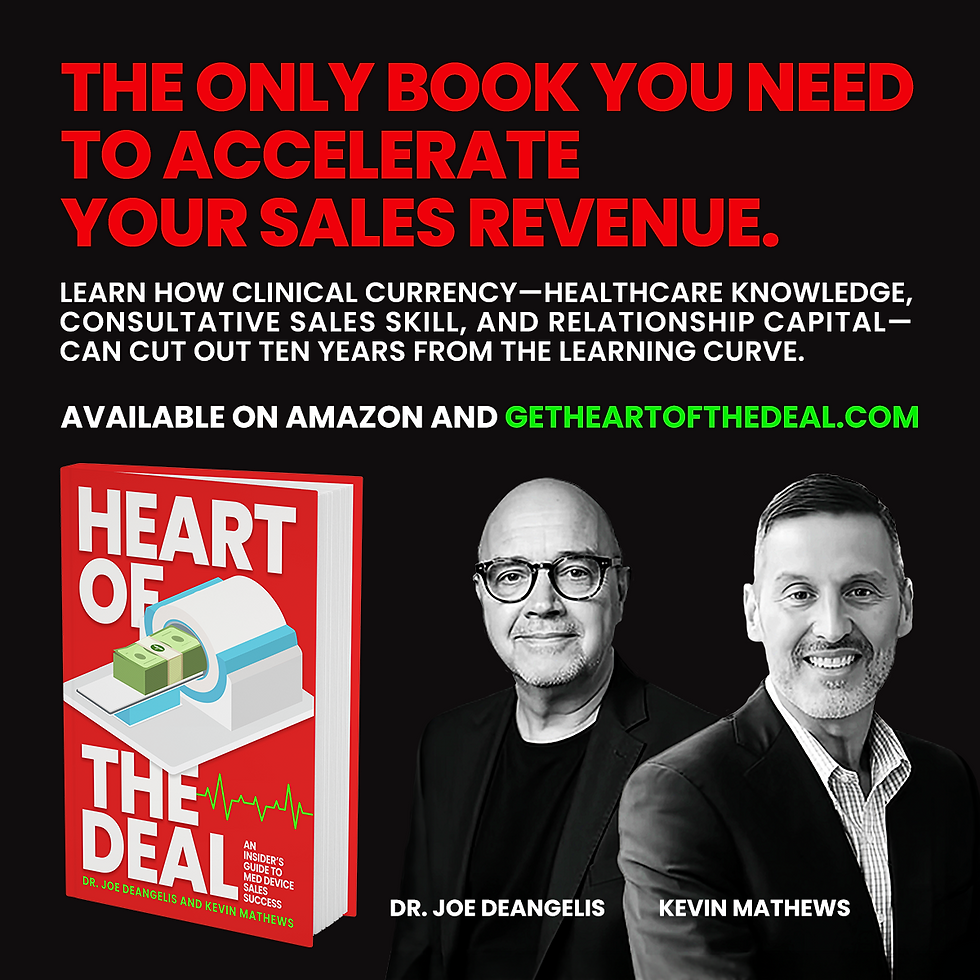
That is exactly why Heart of the Deal was written.
The book was designed to give aspiring medical device professionals an insider’s guide to the realities of the industry, what separates successful candidates, and how to think about the transition in a practical and strategic way.
And for those who want to go beyond awareness and build real evidence of readiness, the MedReady Certification Program provides a more structured path. It is designed to help candidates develop the foundational knowledge, confidence, and credibility that employers want to see.
Final Thought
If you are a great salesperson and you have struggled to break into medical device sales, the problem may not be your talent.
The problem may be that you are trying to enter a highly specialized industry without enough visible proof that you understand its demands.
That is not a permanent problem. It is a preparation problem.
And preparation can be fixed.
If you are serious about making the move, start by learning the industry, understanding the language of healthcare, and building the kind of credibility that reduces risk for employers.
That is how talented people become compelling candidates.
Heart of the Deal can help you understand the path.
MedReady Certification can help you prove you are ready to walk it.
Comments